

 By
By The industrial piping industry has undergone remarkable advancements over the past decade, driven by innovations in material science and manufacturing technology. As industries demand stronger, lighter, and more corrosion-resistant piping components, manufacturers are embracing advanced materials to produce high-performance buttweld fittings that can withstand increasingly challenging operating environments.
From offshore oil platforms and chemical processing plants to power generation facilities and water treatment systems, modern buttweld fittings are engineered to deliver superior reliability, longer service life, and improved operational efficiency. Here’s how advanced material technology is transforming the manufacturing of these essential piping components.
The Evolution of Buttweld Fittings
Traditional carbon steel and stainless steel fittings have served industrial applications for decades. While these materials continue to perform well in many environments, today’s industries require components capable of handling higher pressures, extreme temperatures, aggressive chemicals, and corrosive media.
To meet these evolving demands, manufacturers have introduced advanced alloys and improved production techniques that significantly enhance the durability and performance of buttweld fittings.
High-Performance Alloys Improve Durability
One of the biggest advancements in buttweld fittings manufacturing is the use of high-performance alloy materials.
Modern manufacturers now produce fittings using materials such as:
- Duplex Stainless Steel
- Super Duplex Stainless Steel
- Alloy Steel
- Nickel Alloys
- Inconel
- Monel
- Hastelloy
- Titanium Alloys
These materials provide exceptional resistance to corrosion, pitting, stress corrosion cracking, oxidation, and high-temperature degradation, making them ideal for demanding industrial environments.
Better Corrosion Resistance for Longer Service Life
Corrosion remains one of the leading causes of pipeline failure. Advanced material technology has significantly improved the corrosion resistance of buttweld fittings, reducing maintenance requirements and extending operational life.
Industries operating in marine environments, desalination plants, and chemical processing facilities particularly benefit from these advanced materials, which can withstand continuous exposure to chlorides, acids, and harsh chemicals without compromising structural integrity.
This enhanced durability translates into fewer replacements, lower maintenance costs, and increased plant reliability.
Superior Mechanical Strength
Modern material engineering has also increased the mechanical strength of buttweld fittings.
Advanced alloys offer:
- Higher yield strength
- Greater tensile strength
- Improved fatigue resistance
- Enhanced impact toughness
- Better pressure-handling capability
These properties allow fittings to perform reliably under heavy mechanical loads, high-pressure pipelines, and cyclic operating conditions commonly found in industrial applications.
Precision Manufacturing Technologies
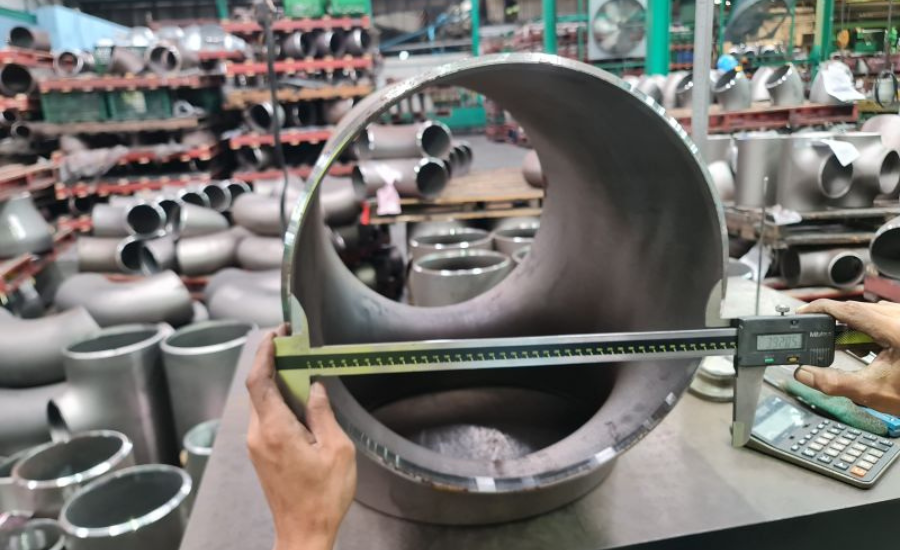
Material innovation is complemented by advancements in manufacturing processes. Computer-controlled machining, automated welding systems, CNC technology, and precision heat treatment enable manufacturers to produce buttweld fittings with exceptional dimensional accuracy and consistent quality.
These technologies help achieve:
- Tighter manufacturing tolerances
- Uniform wall thickness
- Smooth internal surfaces
- Improved weldability
- Consistent product performance
Precision manufacturing also reduces material waste while enhancing production efficiency.
Improved Welding Performance
Advanced metallurgy has made modern buttweld fittings easier to weld while maintaining excellent mechanical properties.
Improved weldability offers several benefits:
- Faster installation
- Stronger welded joints
- Reduced risk of weld defects
- Better structural integrity
- Lower fabrication costs
Properly engineered materials also minimize heat-affected zone issues, ensuring reliable long-term performance after installation.
Sustainability Through Advanced Materials
Modern material technology is also contributing to more sustainable industrial operations.
Long-lasting buttweld fittings reduce the frequency of replacements, minimizing material consumption and industrial waste. Improved manufacturing efficiency lowers energy usage during production, while recyclable stainless steel and specialty alloys support environmentally responsible manufacturing practices.
These developments help industries meet both operational and sustainability goals.
Meeting Global Industry Standards
Today’s advanced buttweld fittings are manufactured in compliance with internationally recognized standards such as ASTM, ASME, ANSI, MSS, and ISO.
Manufacturers conduct rigorous quality testing, including:
- Chemical composition analysis
- Mechanical property testing
- Hydrostatic testing
- Non-destructive testing (NDT)
- Dimensional inspection
These quality assurance measures ensure that every fitting delivers consistent performance in critical industrial applications.
The Future of Buttweld Fittings Manufacturing
The future of buttweld fittings manufacturing lies in continued innovation. Forged Fitting Manufacturers are increasingly investing in smart manufacturing technologies, digital quality control systems, automated inspection, and advanced metallurgy to produce even stronger and more efficient piping components.
Emerging materials with enhanced corrosion resistance, improved strength-to-weight ratios, and superior durability will continue to expand the capabilities of industrial piping systems while reducing maintenance costs and improving operational reliability.
Final Thoughts
Advanced material technology is redefining the performance and reliability of buttweld fittings across industries. High-performance alloys, precision manufacturing, improved corrosion resistance, and enhanced mechanical strength are enabling manufacturers to produce fittings that meet the demanding requirements of modern industrial applications.
As industries continue to prioritize safety, efficiency, and long-term performance, investing in advanced material technologies will remain essential. Choosing high-quality buttweld fittings manufactured using the latest materials and production techniques ensures dependable operation, reduced lifecycle costs, and greater confidence in every piping system.